Craft5 min read
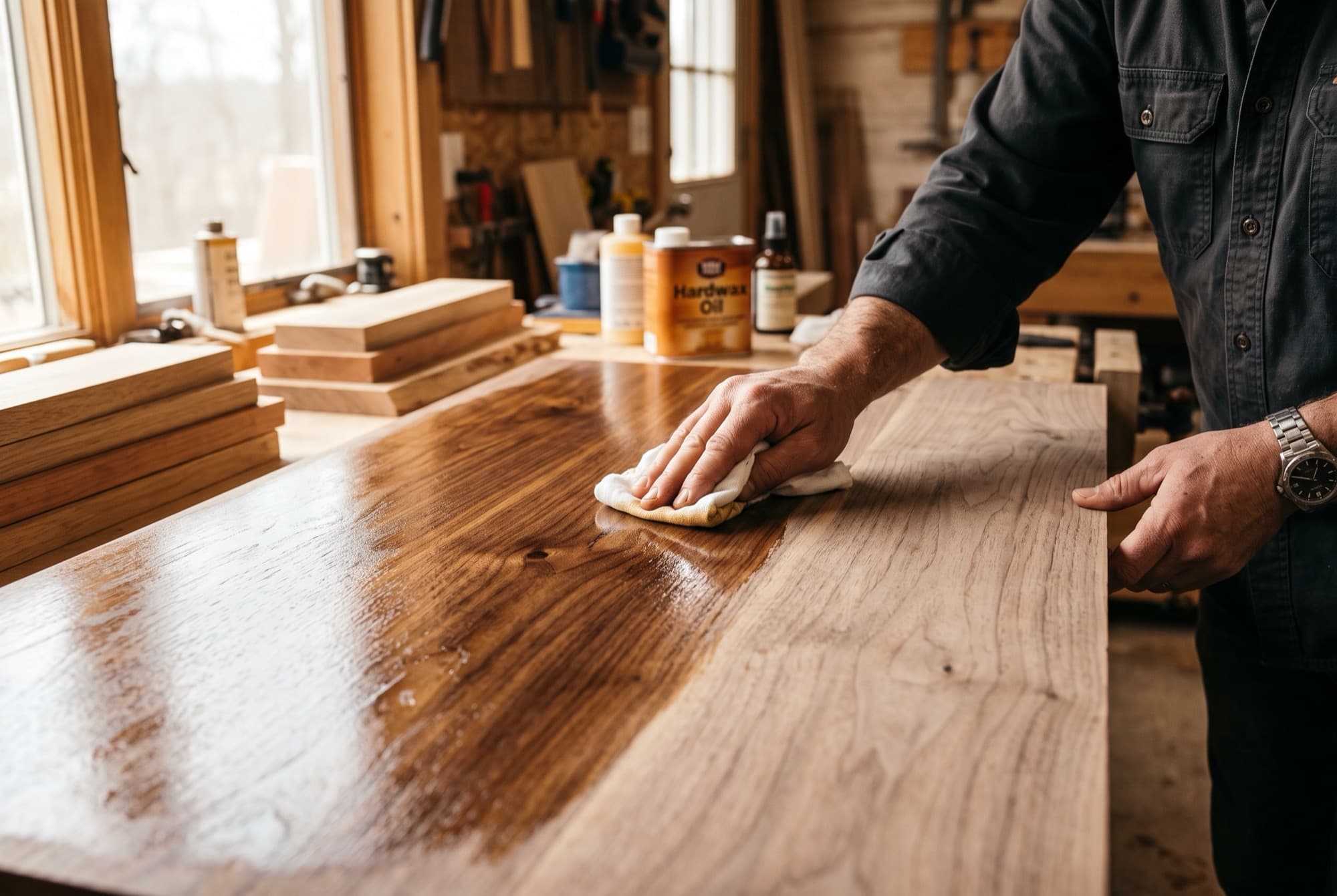
Why We Finish With Hardwax Oil
We standardized nearly every piece on hardwax oil instead of film finishes. Here is the honest case for it, the trade-offs, and how to live with it.
Read the story
Built-Ins
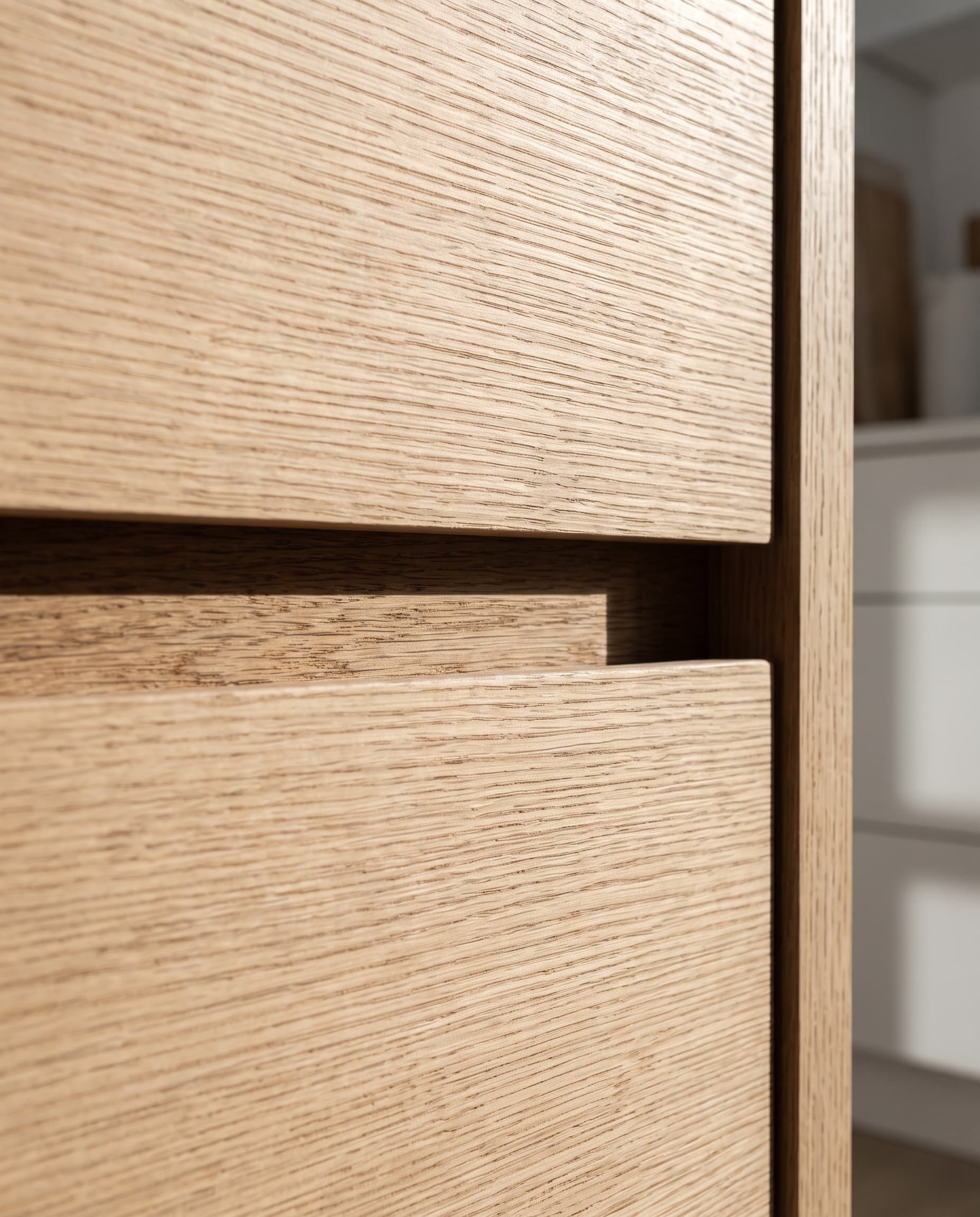
A stack of floating white-oak shelves on hidden steel cleats. Thick solid stock that appears to grow straight out of the plaster with no bracket in sight.
The commission
Floating shelves live or die on the illusion, and the illusion depends entirely on what you can't see. For this living-room wall we milled solid white oak into two-inch-thick shelves, then bored each one to slide over a welded steel cleat lag-bolted into the framing. There is no visible hardware, no sag, and no wobble. Each shelf carries a full load of books and objects as if it were part of the wall itself.
We rift-sawed the oak so the face grain runs straight and calm, then eased every edge just enough to catch the light without looking machined. The ends are left clean and square, a detail that only works because the stock is solid all the way through rather than a veneered box hiding a hollow core. A hardwax-oil finish keeps the oak pale and natural and lets the owners refresh a scuff with nothing more than a rag. Simple to look at and deceptively demanding to build, which is why they look effortless on the wall.
From the journal
The thinking behind this piece, written up at the bench.
Start a commission
The estimator opens on built-ins in white oak — set the size and see a real range in seconds. No email, no sales call.