Tables
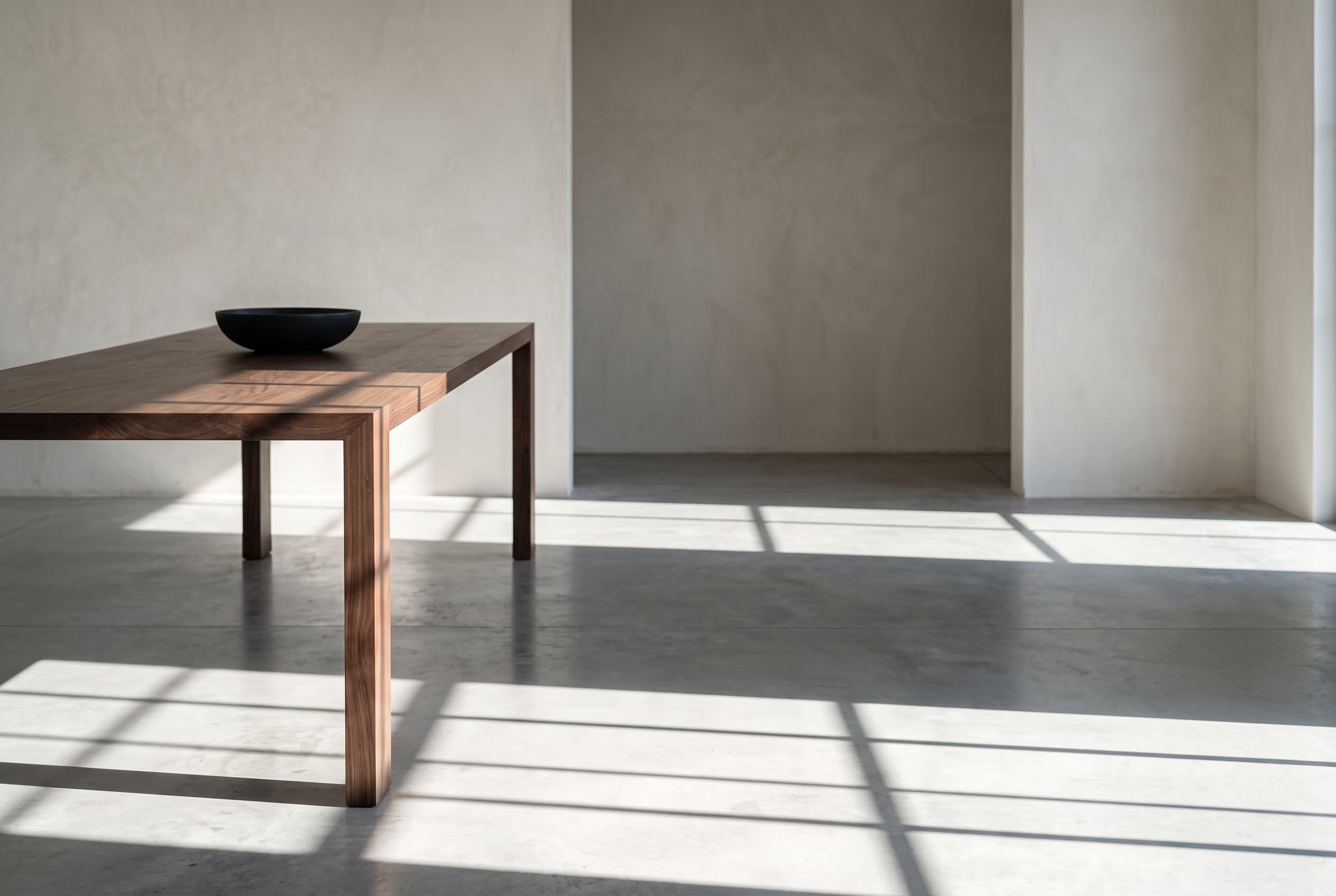
Architectural Walnut & Quartzite Dining Table
A ten-seat statement dining table engineered in solid black walnut with a Taj Mahal quartzite inlay channel and matte black steel legs.
Solid Black Walnut · Taj Mahal Quartzite Inlay2025
Craft
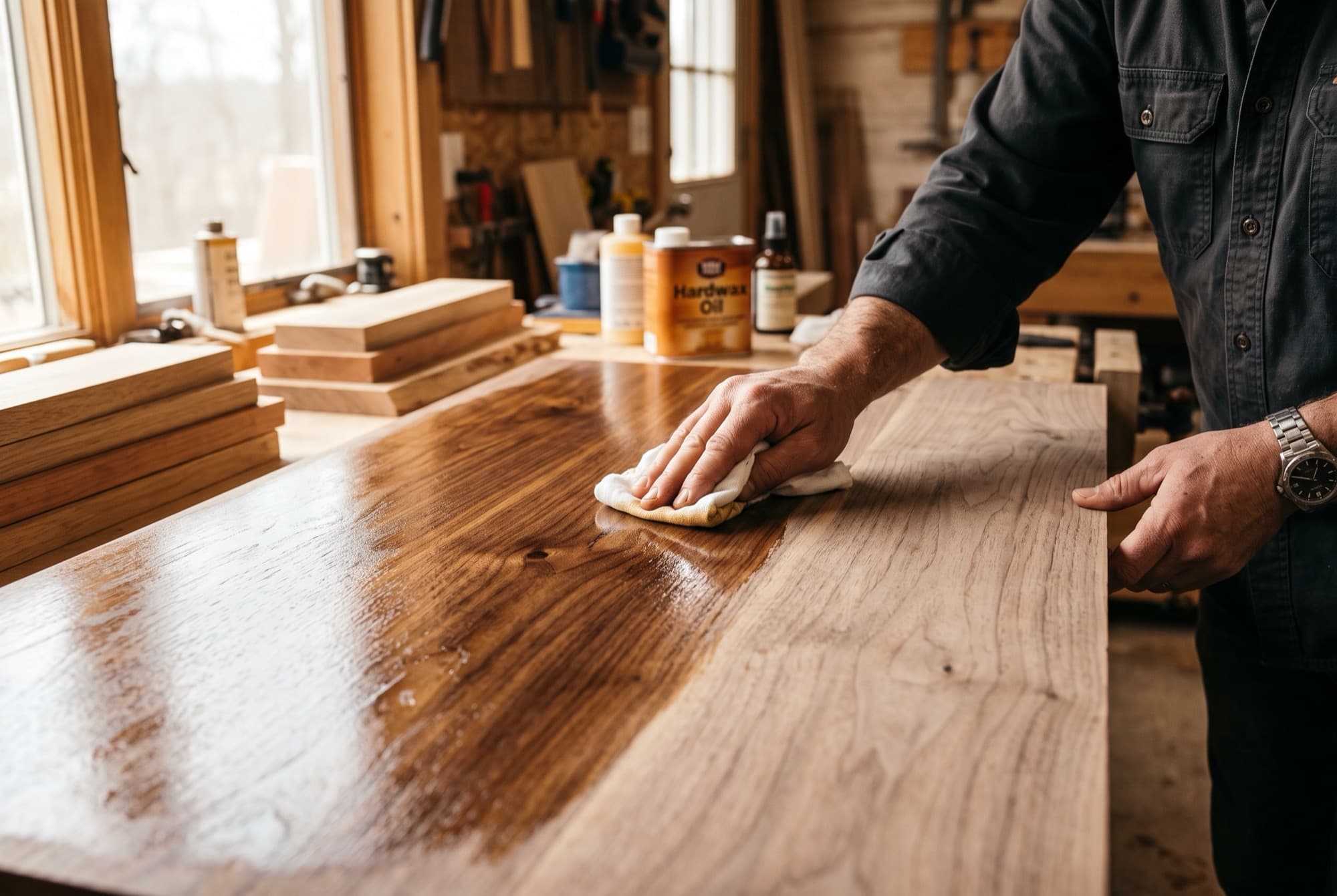
A few years ago we made a decision that quietly changed how our furniture feels and how it ages: we moved almost everything to hardwax oil. Rubio Monocoat and Osmo Polyx are the two we reach for. If you have run your hand across one of our tables and thought it felt like wood rather than plastic, that is the reason. This is the finish we recommend to most clients, and here is the full, unvarnished case, including where it costs you something.
Almost every wood finish falls into one of two camps. Film finishes, polyurethane, lacquer, conversion varnish, cure into a continuous plastic layer that sits on top of the wood. Penetrating finishes soak into the fibers and harden inside the surface itself. Hardwax oil is the refined modern version of the penetrating camp: oils that carry hard waxes down into the grain, then cure by oxidation into a thin, tough, breathable surface.
The difference is not academic. A film finish is, in effect, a sheet of clear plastic glued to your table. It is genuinely more waterproof and more chemical-resistant than oil, and for a bar top that gets abused nightly, that can be the right call. But the wood underneath is sealed away. You are touching the coating, not the material. Hardwax oil leaves the surface open enough that the texture and warmth of the grain come through your fingertips. On walnut and white oak, the depth it pulls out of the figure is hard to overstate.
Clients underrate this one until the day they need it.
When you damage a film finish, you are largely committed to refinishing the whole surface. A scratch through polyurethane cannot be feathered invisibly into the surrounding coating, because you would be sanding into a cured plastic sheet and the repair witnesses every time. Real fixes mean sanding the entire top back and recoating, which on a finished piece in a home is a miserable, dusty, days-long job.
Hardwax oil repairs spot by spot. A water ring, a scuff, a scratch: you scuff-sand just that area with a fine pad, wipe on a little more oil, wipe off the excess, and it blends into the original finish because there is no film edge to give it away. A client can do it themselves in twenty minutes with a rag. A ten-year-old table can be brought back to looking new, section by section, forever. That is what "heirloom" actually requires. A finish you can maintain is worth more over a lifetime than a finish that is marginally tougher on day one.
A film finish protects the wood until the day it fails, and then it fails all at once. A hardwax oil finish ages, and you renew it a patch at a time. We would rather sell you something you can keep alive than something you eventually have to strip.
The process rewards restraint, which is why it goes wrong for people who treat it like paint.
First, the surface preparation is deliberately not fine. For film finishes you might sand to 220 or higher, but hardwax oil needs open grain to penetrate, so we stop around 150 to 180 grit. Sand too fine and you burnish the surface closed and the oil cannot key in. Then we vacuum and wipe clean, because any dust becomes a permanent inclusion.
We apply a thin coat, worked into the grain with a pad or cloth, and here is the critical part: within roughly fifteen to twenty minutes we wipe off every trace of excess. Hardwax oil is not a build finish. Any oil left sitting on the surface stays gummy and never fully cures. Then we buff hard, which both removes the last excess and generates a little heat that helps the finish lay down. Rubio is engineered as a genuine one-coat product; Osmo we usually give two thin coats. It is touch-dry in a day, handleable in a day or two, and reaches full cure in about a week. We tell clients to keep water and heavy use off a fresh piece for that first week while the oxidation finishes.
We are not going to pretend this finish is free of compromise.
For dining tables, desks, shelving, most cabinetry, and any piece where the point is to feel and see real wood, hardwax oil is our default and our recommendation. It looks honest, ages with grace, and stays repairable for the life of the piece. For a commercial bar, a bathroom vanity that lives under standing water, or a client who truly will never maintain a thing, we will steer you to a film finish without hesitation, because the right finish is the one that fits how the piece will actually live.
Most of the time, though, people want furniture that feels like the material it is made from and gets better with age rather than slowly wearing out. That is why nearly everything that leaves our shop wears this finish.
No comments yet. Be the first to start the conversation!
From the portfolio
The commissions behind this one: what the ideas above look like once they leave the bench.
A ten-seat statement dining table engineered in solid black walnut with a Taj Mahal quartzite inlay channel and matte black steel legs.
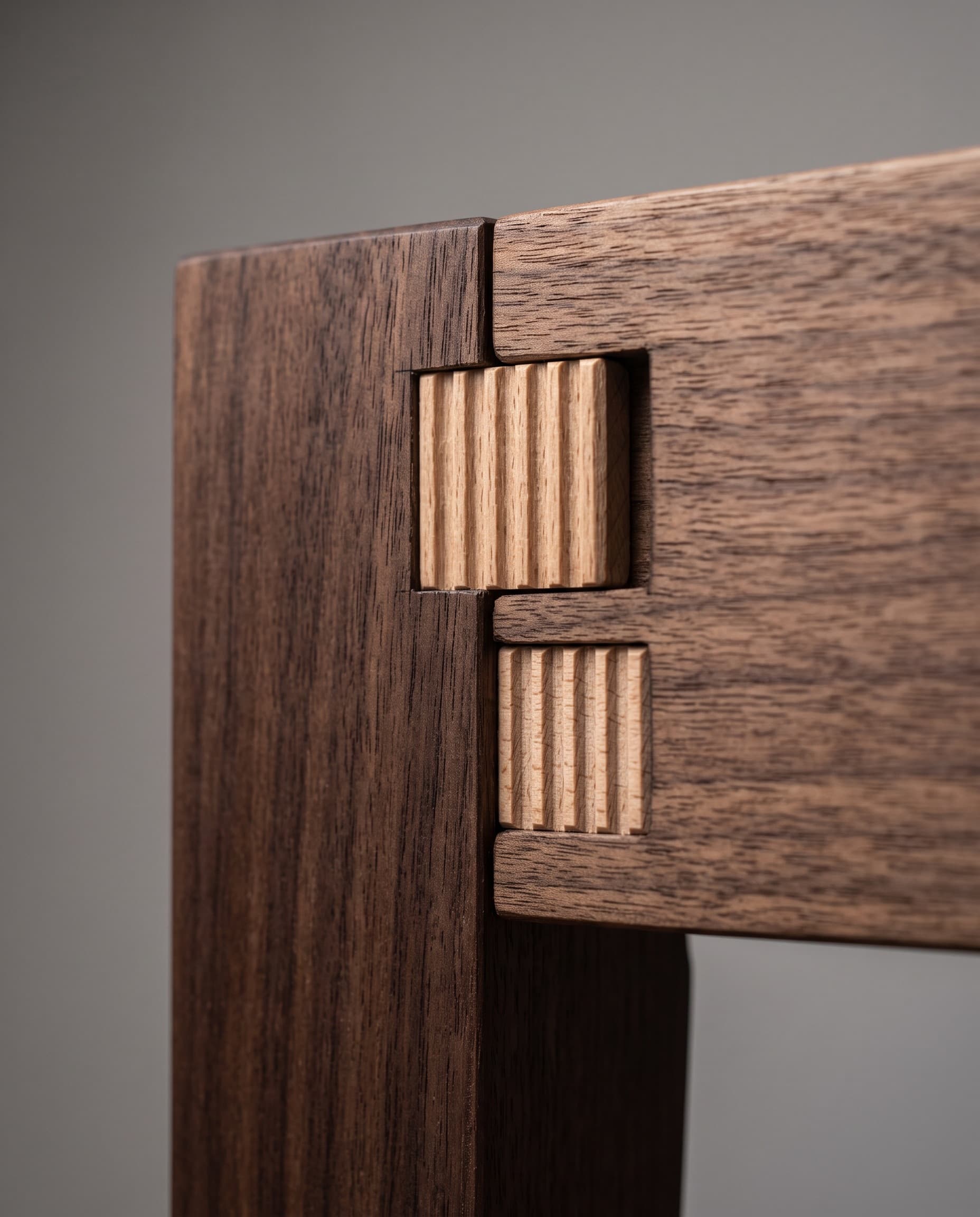
A walnut executive desk with a mitered waterfall edge, hidden cable management, and an inset leather writing panel. Built for long days and a lifetime of use.
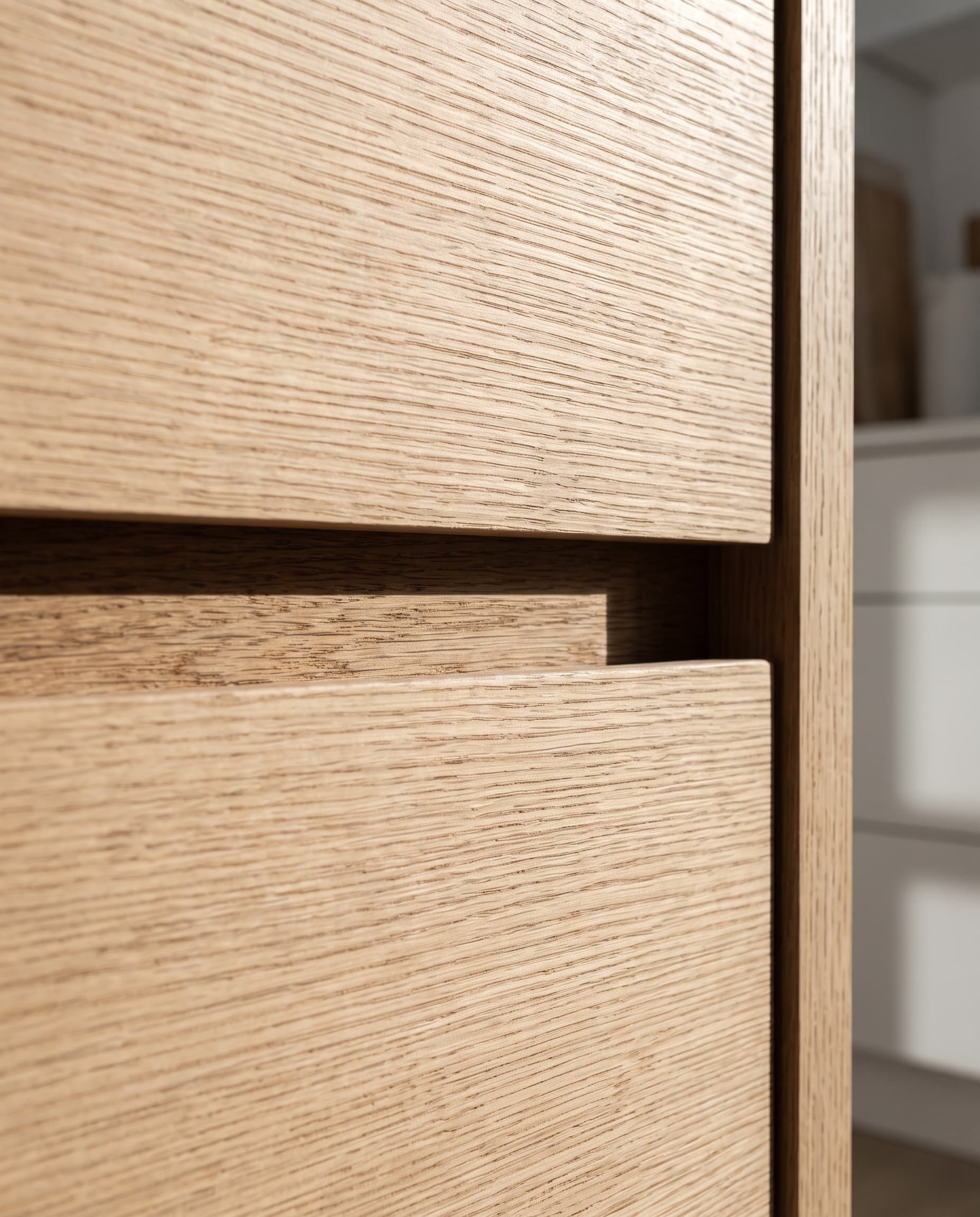
A stack of floating white-oak shelves on hidden steel cleats. Thick solid stock that appears to grow straight out of the plaster with no bracket in sight.
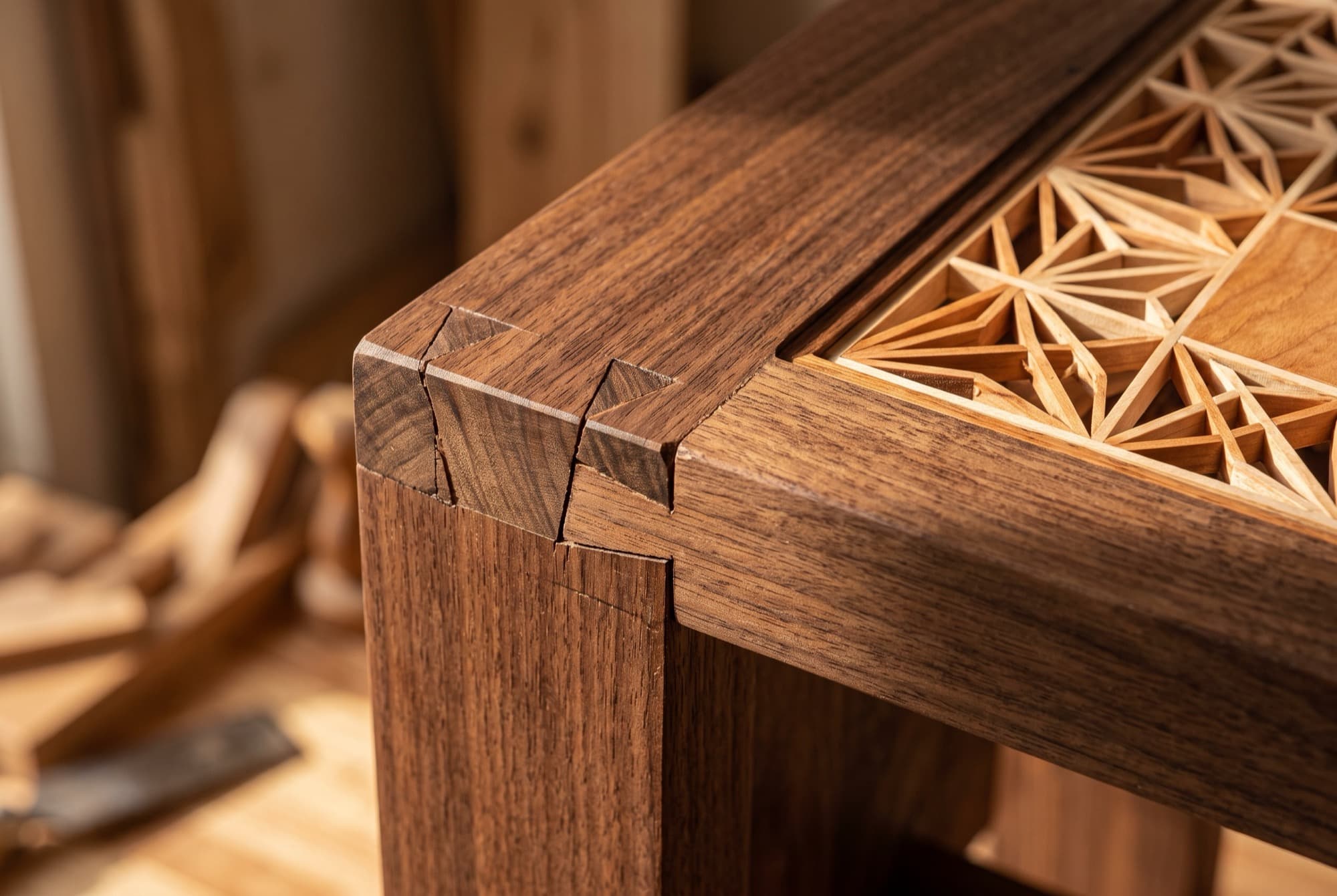
Craft
Kumiko, exposed joints, and hand tools in a shop that also runs machines. How we use Japanese joinery as a design language rather than a costume.
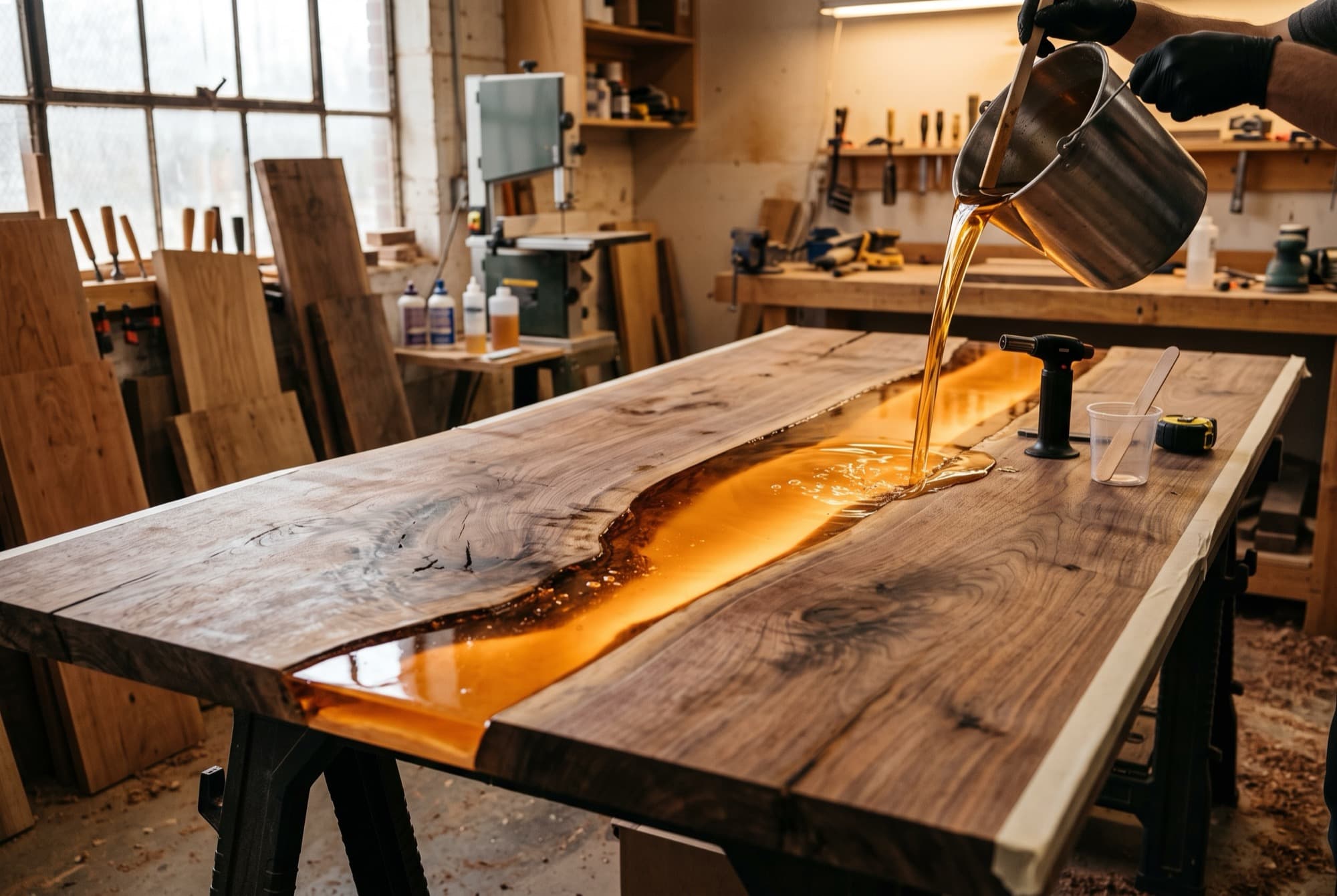
Build Logs
Slab to delivery on a nine-foot black walnut river table: sourcing, flattening, a three-lift epoxy pour, finishing, and getting 300 pounds through a door.
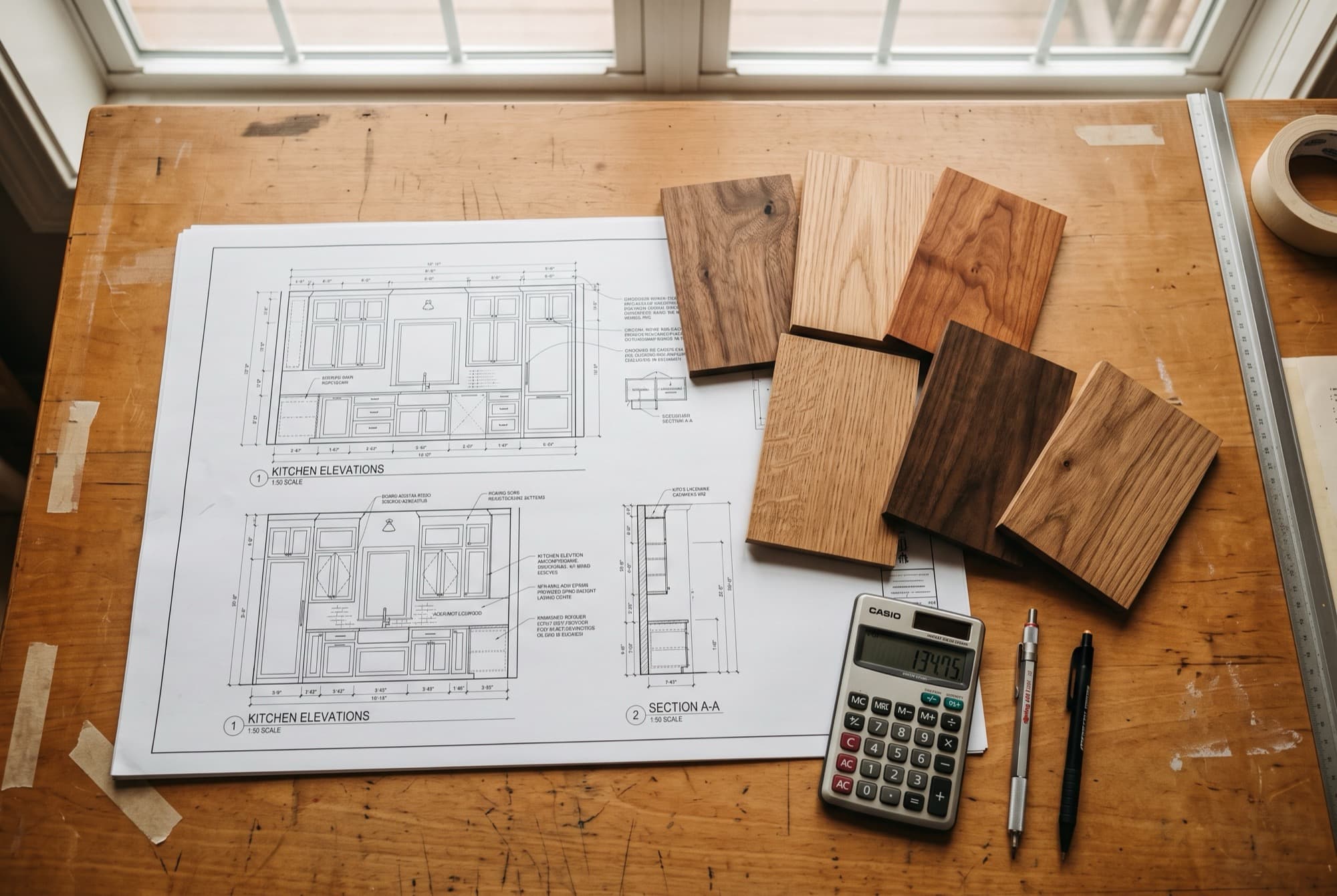
Guides
Real linear-foot ranges, what actually drives the number, and the honest cases where semi-custom is the smarter buy, from a shop that builds custom.
Start a commission
Tell us about the piece you're picturing. We'll reply within two business days with the wood, the approach, and a realistic timeline.