Tables
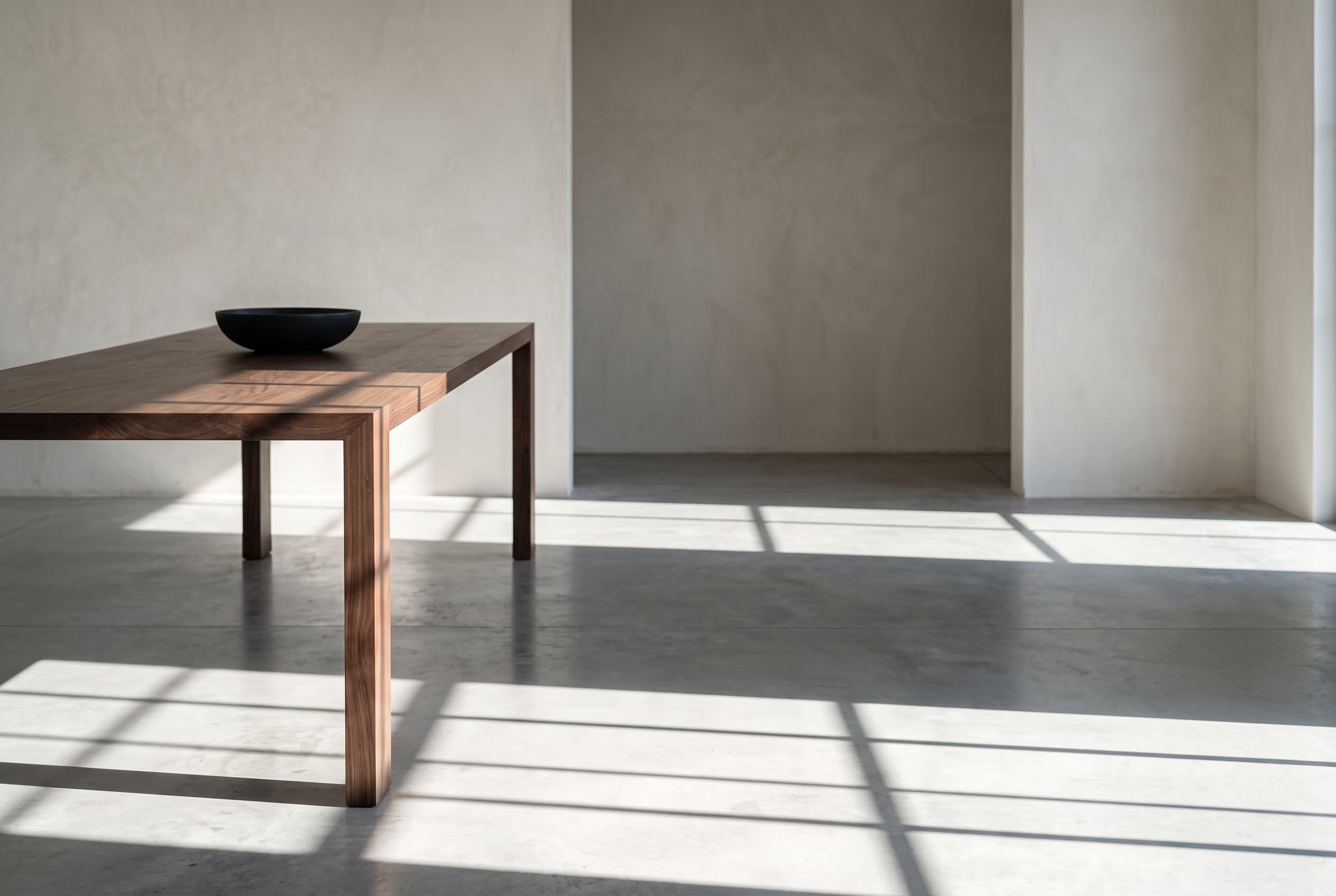
Architectural Walnut & Quartzite Dining Table
Solid Black Walnut2025
Guides
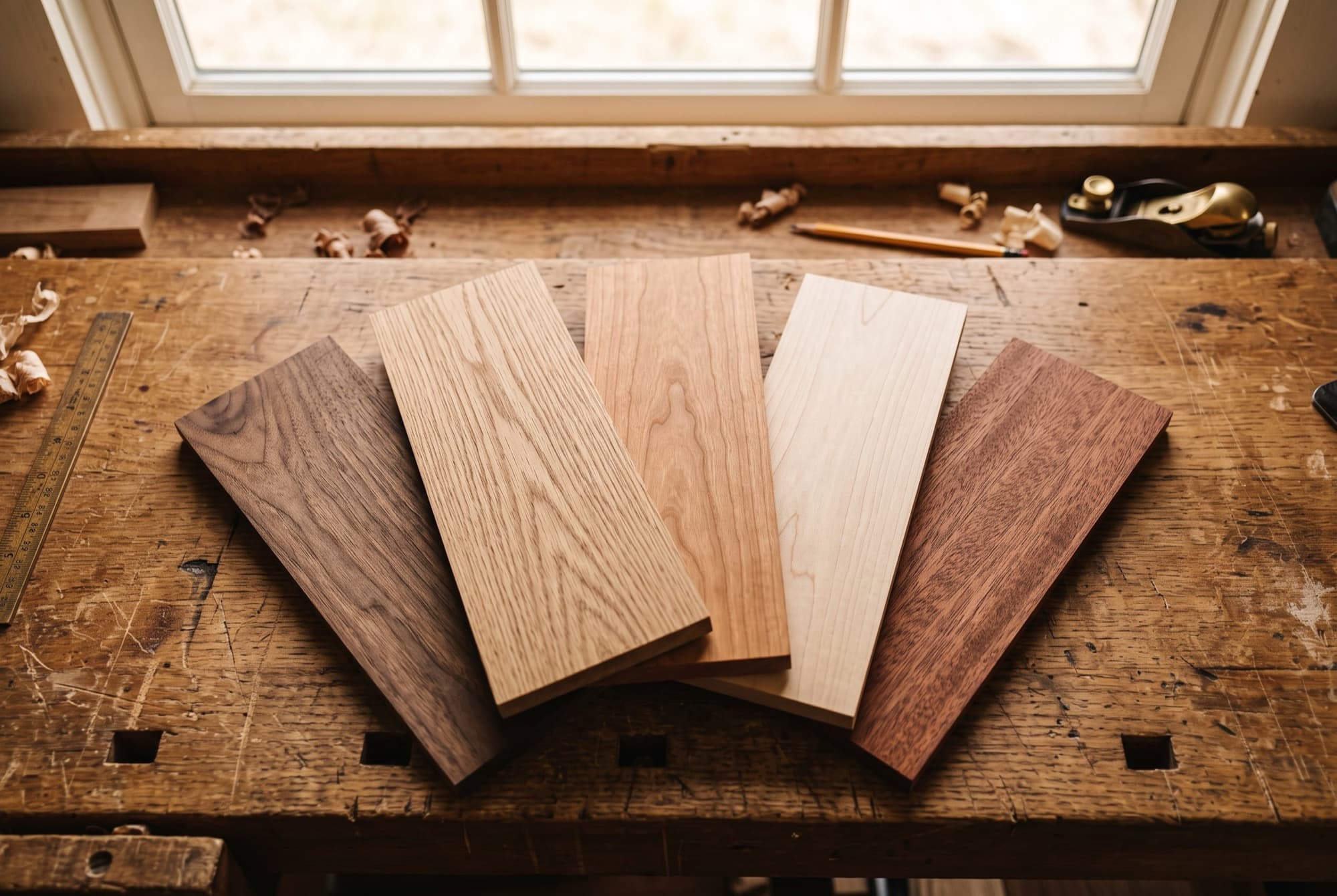
The single question we get most often, before budget, before timeline, before anything else, is "what wood should I use?" It is the right question to ask early, because species drives almost everything downstream: the price, the weight, how the piece ages, how it handles a decade of dinners or a toddler with a fork. There is no universally correct answer. There is a correct answer for your piece, your room, and how you actually live. Here is how we think it through in the shop.
Hardness gets measured on the Janka scale, which records the force needed to press a steel ball halfway into the wood. It is a useful shorthand for dent resistance. Black walnut sits around 1,010 lbf. Cherry is softer at roughly 950. Hard maple is up near 1,450, and white oak lands around 1,360. Red oak is close behind at 1,290.
What those numbers tell you is real but narrow. A harder wood resists the dropped cast-iron pan and the dog's claws better. That matters enormously for a kitchen island top or a mudroom bench, and much less for a bookcase nobody touches. But hardness is not the same as durability, and it says nothing about how a wood behaves as the seasons change. We have repaired plenty of very hard tabletops that cracked because nobody accounted for movement.
Wood is hygroscopic. It takes on and gives off moisture with the humidity in your home, and it changes dimension as it does, always far more across the grain than along it. A 40-inch-wide solid tabletop can gain or lose close to a quarter inch between a humid August and a dry, heated January. Ignore that and joints split, panels crack, and doors that closed in spring bind in winter.
Species differ in how much they move and how evenly. Walnut is one of the best-behaved cabinet woods we use: dimensionally stable, forgiving, easy to keep flat. Cherry is similarly cooperative. The oaks move more, and red oak's open, porous structure makes it thirstier than white oak, whose pores are plugged with tyloses (the same trait that lets white oak hold whiskey and stand up to weather). Hard maple is stable enough but unforgiving of mistakes because it moves briskly when it does move.
We design for movement rather than fighting it: breadboard ends that float, panels that sit loose in their frames, tops fastened with clips or slotted hardware that let the wood breathe. Good joinery is mostly humility about what wood is going to do anyway.
The color you pick in the shop is not the color you live with in five years. Every wood ambers and shifts under light, and some do it dramatically.
Cherry is the showpiece here. Fresh off the planer it is a pale pinkish tan that people often find underwhelming. Give it six months of indirect light and it deepens into a warm russet-brown; a few years in and it is the rich, glowing red-brown that made cherry famous. We tell clients to judge cherry by photos of aged pieces, never by a fresh sample.
Walnut moves the other direction. It starts deep chocolate-brown, sometimes with purple or gray streaks, and gently lightens and warms toward honey as UV mellows it. Maple stays close to its cream-to-blond self, which is exactly why people choose it for bright, modern rooms, though it will pick up a faint golden cast over time. White oak keeps its tawny neutrality and takes stains and fumed treatments beautifully. If you want a piece to look the same in a decade as it does the day it arrives, that expectation is worth a conversation, because no natural wood fully holds still.
Walnut is our default for heirloom dining tables, desks, and statement pieces. It is stable, forgiving, stunning under a natural oil, and it photographs like nothing else. It is also the most expensive of the four, and there is no way around that.
White oak is the workhorse of good cabinetry and built-ins. It is hard, stable, water-tolerant, and its straight grain and ray fleck (especially quartersawn) read as quietly premium. It is our first suggestion for kitchens and anything near water.
Hard maple earns its keep where hardness is the point: butcher-block tops, cutting surfaces, worktops, and painted cabinetry where you want a dense, tight grain under the finish. Be warned that maple can blotch badly under stain; we usually finish it clear or paint it rather than stain it.
Cherry is for the client who wants warmth and is patient enough to let it develop. It machines like a dream, ages gorgeously, and sits at a friendlier price than walnut.
Prices vary by region, board width, figure, and the year, so treat these as shop-floor ballparks for 4/4 (one-inch-rough) domestic hardwood, not quotes. Cherry and hard maple tend to run roughly $6 to $9 per board foot. White oak sits in a similar band, a little higher for good quartersawn stock, call it $7 to $11. Walnut is the outlier, commonly $10 to $15 per board foot and climbing fast for wide, well-figured, or long boards.
Those per-board-foot gaps compound. A dining table might eat 40 to 60 board feet once you account for waste, so walnut versus cherry can swing the raw material cost by hundreds of dollars before a single cut. That is not a reason to avoid walnut. It is a reason to know going in where the money goes, so the choice is yours and not a surprise on the invoice.
If you already know the room and how you live in it, we can usually narrow the species in one conversation. Bring us the use case, not just the look, and the right wood tends to pick itself.
No comments yet. Be the first to start the conversation!
From the portfolio
The commissions behind this one: what the ideas above look like once they leave the bench.
Guides
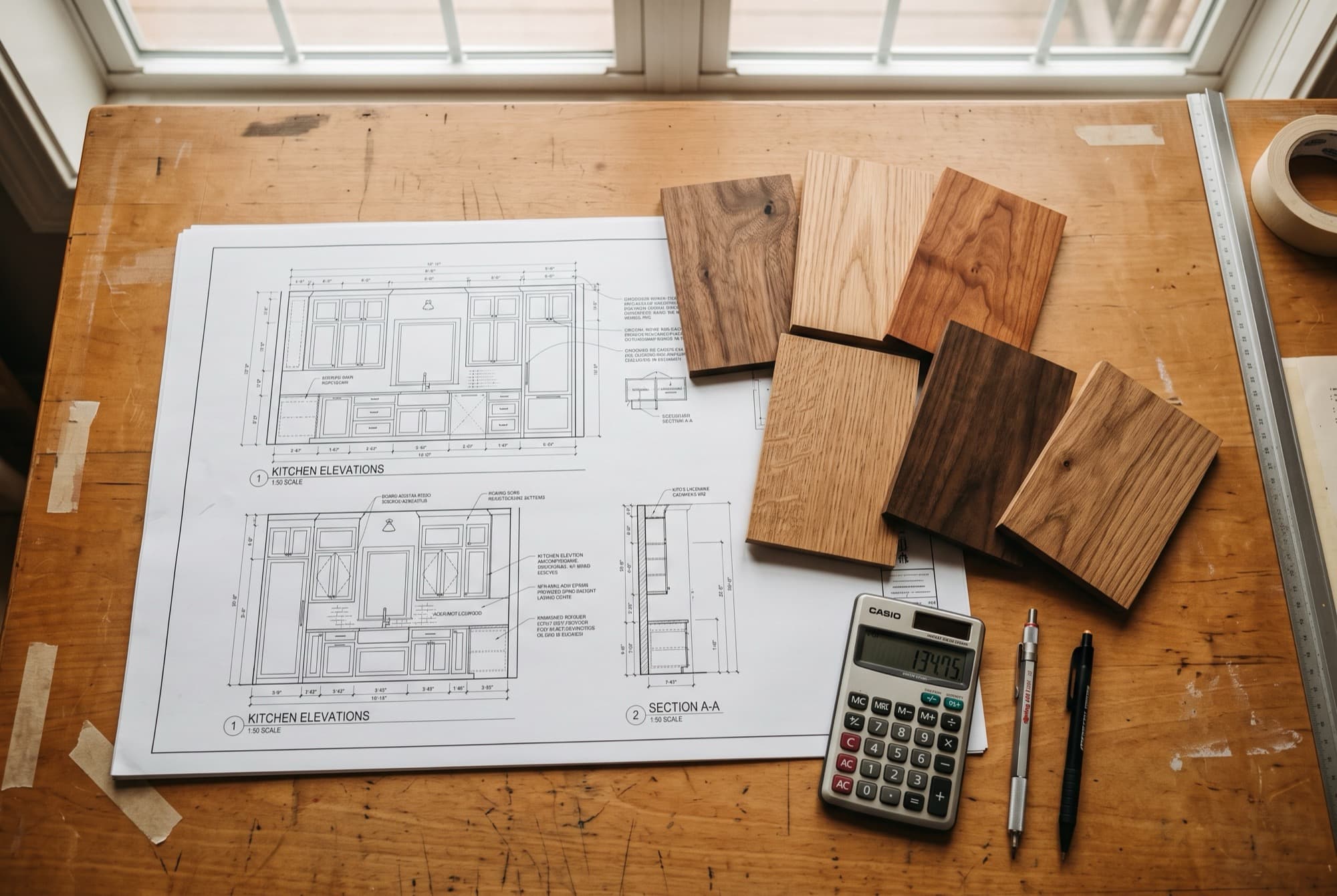
Real linear-foot ranges, what actually drives the number, and the honest cases where semi-custom is the smarter buy, from a shop that builds custom.
Build Logs
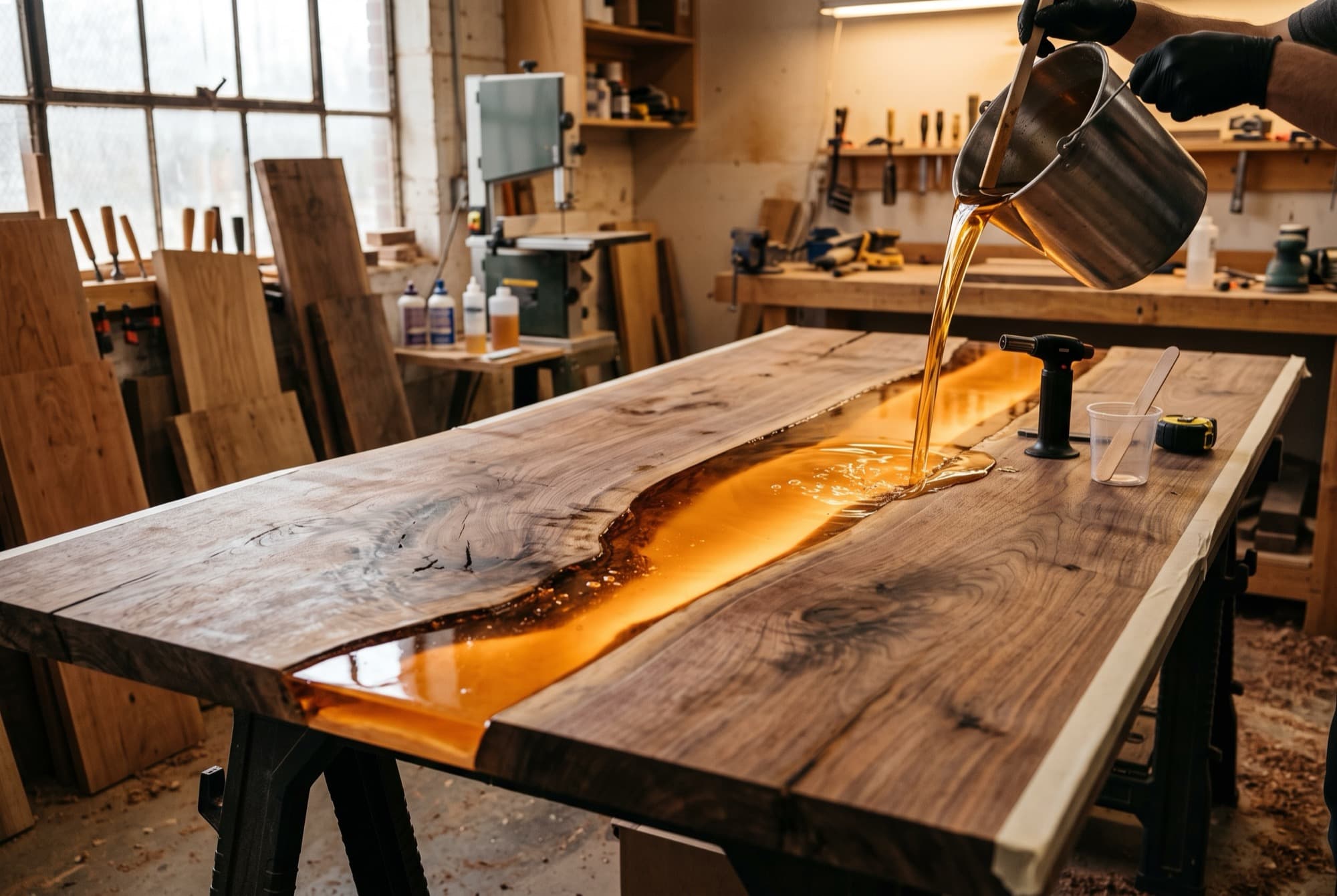
Slab to delivery on a nine-foot black walnut river table: sourcing, flattening, a three-lift epoxy pour, finishing, and getting 300 pounds through a door.
Craft
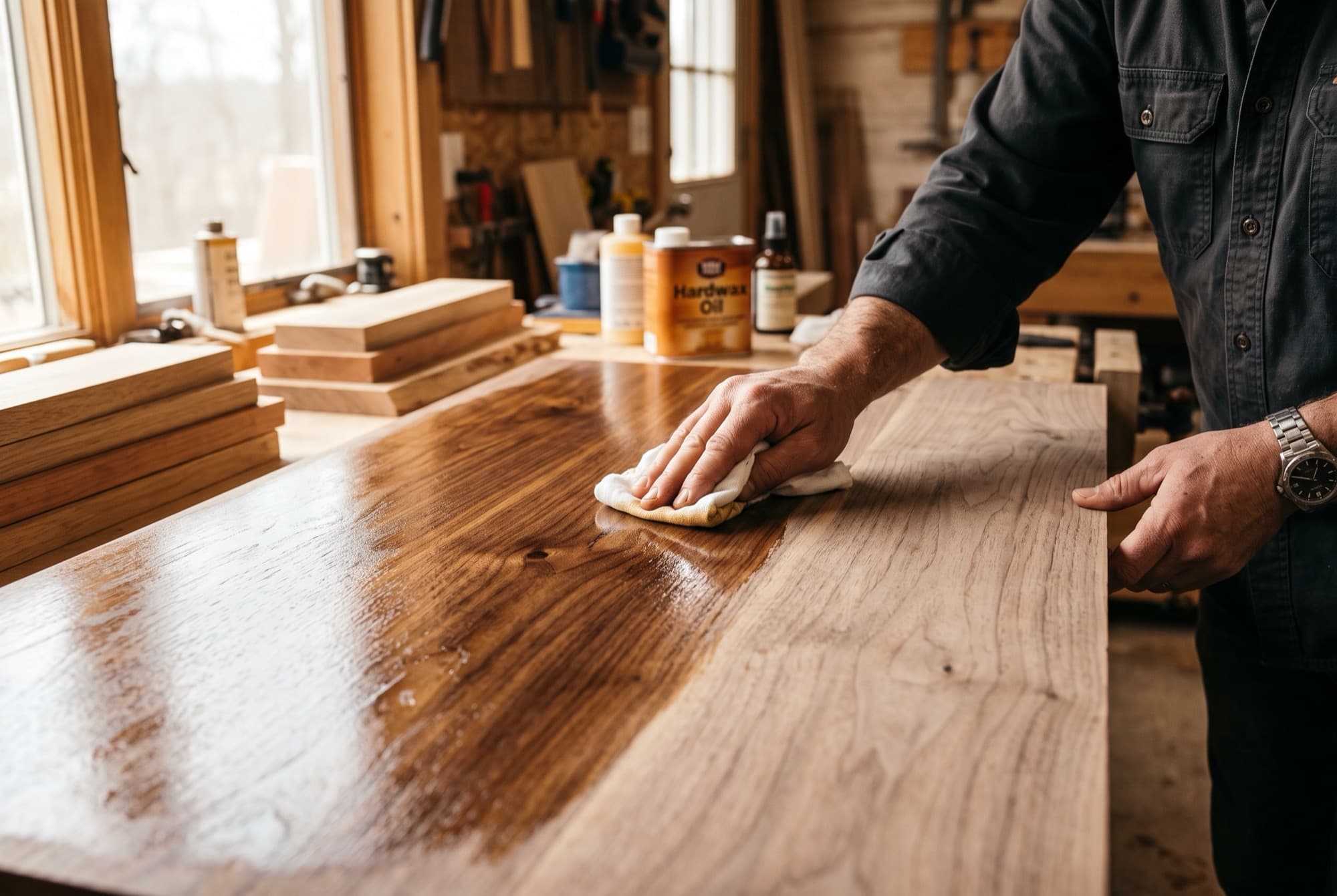
We standardized nearly every piece on hardwax oil instead of film finishes. Here is the honest case for it, the trade-offs, and how to live with it.
Start a commission
Tell us about the piece you're picturing. We'll reply within two business days with the wood, the approach, and a realistic timeline.